Kansas families didn't ask to become the front lines of the digital currency debate. But when crypto kiosks started showing up in gas stations and grocery stores across our state, and scammers started using them to drain the savings of our seniors, we had no choice but to act. Over the past two years, I worked to build a Kansas framework that takes digital assets seriously: both the genuine promise they hold and the very real dangers they pose when left ungoverned. Earlier this year, Kansas passed House Bill 2591, the Virtual Currency Kiosk Consumer Protection Act, which was signed into law this spring. That legislation requires kiosk operators to register with the state, use blockchain analytics software to screen for wallets tied to known fraud, display clear on-screen warnings before any transaction, cap fees, and ensure live customer service is always available. It passed unanimously. Not a single Kansas legislator voted against protecting our families. As I said when we moved this legislation forward: Kansas families and seniors deserve consistent protections, whether a transaction happens in Topeka or through a server on the other side of the world. Kansas is moving to strengthen its safeguards. Now Washington must do the same and ensure that innovation does not come at the cost of security. That moment has arrived. The Digital Asset Market Clarity Act, or the Clarity Act, is now before the United States Senate, having passed the House last July with a commanding bipartisan vote of 294 to 134 and cleared the Senate Banking Committee this May. Kansas's two U.S. Senators, Jerry Moran and Roger Marshall, have the standing, the credibility, and the duty to help carry it across the finish line. For years, digital asset markets have operated in a regulatory no-man's land, with inconsistent rules and regulatory gaps. This ambiguity does not protected consumers and allows criminals to operate. The Clarity Act ends that confusion. The bill draws clear jurisdictional lines and creates a modern enforcement framework that prioritizes fraud prevention, accountability, and coordination between state and federal authorities. It is designed, in the Senate Banking Committee's own words, to "prevent a future FTX collapse," the kind of catastrophic fraud that wiped out billions in ordinary Americans' savings. These are exactly the kinds of guardrails Kansas has been building at the state level. Washington should be doing the same. State-by-state protections are not a substitute for a national framework. A scammer who uses a crypto kiosk in Wichita can route funds through a dozen foreign servers before the transaction settles. That is not a problem Kansas alone can solve. For years, unregulated crypto platforms have competed against community banks without carrying deposit insurance requirements, capital mandates, or the full weight of federal banking regulation. The Clarity Act begins to level that playing field by bringing digital asset intermediaries under comparable federal oversight. Even more importantly, it gives community banks a defined regulatory lane to participate in the digital asset economy themselves, rather than watching from the sidelines as megabanks build out their own tokenized infrastructure. The Independent Community Bankers of America called the bill's committee passage "an important step" toward protecting Main Street community lending. Without clear rules, Kansas community banks face the worst of both worlds. The Clarity Act changes that. Kansas acted. We did it with broad bipartisan support and the backing of AARP Kansas, the Kansas Bankers Association, and the Credit Union Association. Senator Moran has spent decades fighting for Kansas's rural communities and small businesses, the same Kansans most likely to be targeted by crypto fraud. Senator Marshall has consistently focused on cutting through government dysfunction to let markets work. But markets only work when rules apply equally to everyone. It is time to protect Kansans.
In my rural district, which covers northeast Kansas, families look out for one another and protect their kids at all costs. In our small towns, Kansans trust that public schools will not open their doors to child predators, banks will not make sharky loans to children, and corner stores will not sell unaccompanied minors alcohol, tobacco, or other age-restricted products. Unfortunately, Kansas parents cannot count on the same protections for their kids online. Today’s digital world works less like a small town and more like the Wild West. The fabric of trust, accountability, and shared values that ties Kansans together is nowhere to be found on our kids’ phones and tablets – least of all on the app store marketplaces that deliver millions of poorly regulated platforms straight to our kids’ home screens. In just a few taps, app stores allow kids to download improperly age-rated platforms, including social media apps, violent video games, AI chatbots, and anonymous messaging tools, all of which can become breeding grounds for blackmailers and child predators. When kids agree to download or purchase these platforms, they also consent to opaque terms of service conditions that allow developers to comb through their contacts, search history, and camera roll and constitute binding contracts. At no point in the process is a parent notified or asked to consent. As a father, I find this lack of default, automatic protection entirely unacceptable. Parents deserve better tools to supervise kids online. And children deserve stronger safeguards. That is why I support Senate Bill 372 , the App Store Accountability Act. Senate Bill 372 would restore trust, order, and transparency to the app store overnight. Just like teachers require a signed permission slip for a student to participate in a field trip, Senate Bill 372 would require informed parental consent for all minors’ app downloads and purchases. This precautionary step has potential to stop harm in its tracks, empowering parents to block kids’ access to risky apps that open the door to cyberbullying, mature content, sextortion, and more before they are ever installed. How it works in practice is simple. Senate Bill 372 would require app stores to use their existing age-verification mechanisms as the foundation for obtaining parental approval. During account set-up, app stores would link minor and parent accounts, providing parents with a secure and familiar system to manage the platforms available on their kids’ devices without needing to repeatedly share age information on an app-by-app basis. Kansans agree this bill is necessary. Recent polling shows overwhelming bipartisan support for Senate Bill 372’s core premise: 81% of Kansans, including 82% of parents, support requiring app stores to verify users’ ages and obtain parental consent before minors can download apps. The reason behind this near-unanimous support is simple. App stores serve as the primary gateways to the digital world, and parents agree that is where meaningful safeguards must begin. Parental consent, truth in advertising, contracting fairness, and age-gating are common-sense safety guardrails that ought to be built-in to app stores, just as they are in the real world. Kansas parents are tired of waiting for Washington to deliver the digital protections our kids urgently need. It’s time we follow in the footsteps of Utah, Texas, Louisiana, and Alabama and pass the App Store Accountability Act in Topeka. I was proud to vote with my Senate colleagues to advance Senate Bill 372 to the Kansas House of Representatives where it now awaits a hearing in the Committee on Federal and State Affairs. I urge my fellow state lawmakers to act without delay and pass this bill to protect future generations from exploitation and the harms of an unaccountable digital marketplace.
Kansas Senator Craig Bowser introduced legislation on Jan. 21 that would create a state Bitcoin reserve through unclaimed digital assets. The bill explicitly shields Bitcoin from transfer to the state's general fund. It takes a custody-focused approach rather than authorizing direct cryptocurrency purchases with state funds. Senate Bill 352 establishes a "Bitcoin and digital assets reserve fund" administered by the Kansas State Treasurer, according to the official bill text. The legislation amends Kansas unclaimed property statutes to include digital assets, with a three-year abandonment period before the state can claim dormant cryptocurrency holdings. The bill's most distinctive provision creates a two-tier treatment for digital assets. Non-Bitcoin digital assets would see 10% of each deposit credited to the state general fund. Bitcoin receives explicit protection under Section 1(b), which states the treasurer "shall not deposit bitcoin in the state general fund." Custody Framework and Staking Provisions Digital assets reported as abandoned must be delivered to a qualified custodian within 30 days. The bill defines qualified custodians as entities licensed to sell digital assets and offer custody services in Kansas. These include chartered banks and trust companies. The legislation permits custodians to stake digital assets and receive airdrops. Staking means earning rewards by locking up crypto to secure a blockchain network, while airdrops are free token distributions. After three years, these proceeds transfer to the reserve fund if the property remains unclaimed. State Reserve Movement Context Kansas joins a growing number of states pursuing Bitcoin reserves. President Trump signed an executive order in March 2025 establishing a federal Strategic Bitcoin Reserve . The federal reserve has since expanded to over 326,000 BTC following additional seizures. The Kansas approach differs significantly from Texas, which became the first state to make a direct Bitcoin purchase on Nov. 20, 2025. Texas acquired $5 million in Bitcoin through BlackRock's iShares Bitcoin Trust at $91,336 per coin under its Strategic Bitcoin Reserve program. SB 352 was referred to committee on Jan. 22. The unclaimed property approach follows a similar structure to Arizona's HB 2749, signed into law in May 2025. Three states have enacted reserve legislation, with 17 additional states considering similar measures. Bowser previously sponsored SB 34 in January 2025 to allow the Kansas Public Employees Retirement System (KPERS) to invest in Bitcoin ETFs, but the bill remains in committee with no further action.
Cryptocurrency scams are a growing cyber threat to Kansas families and seniors. New state legislation aims to prevent fraud, protect consumers, and strengthen digital security.
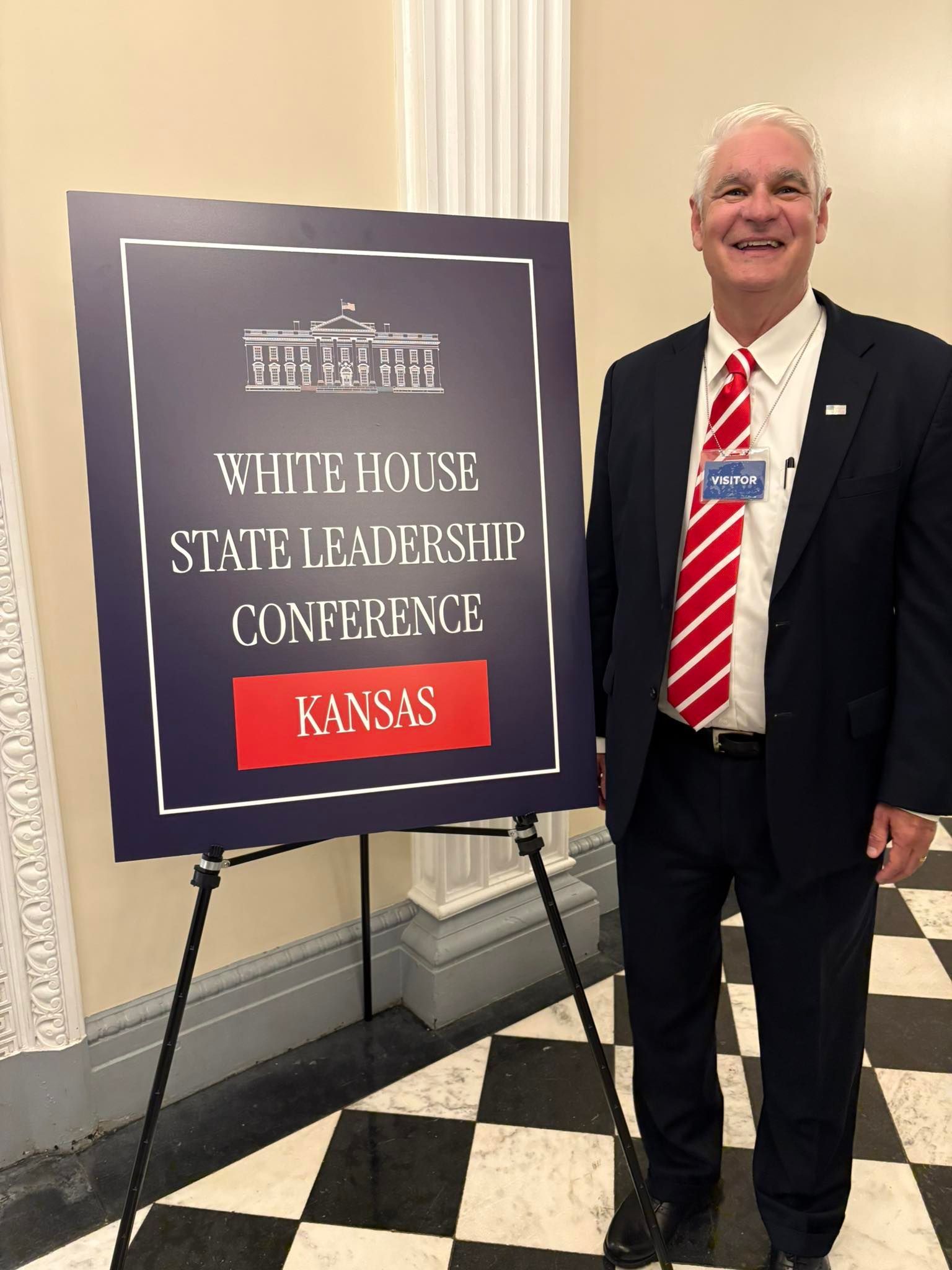
Washington, D.C. — Kansas Senator Craig Bowser (Senate District 1) joined 36 Republican legislators from the Kansas House and Senate for a White House meeting on October 15, 2025, hosted by the Office of Intergovernmental Affairs. The four-hour session brought together federal officials and state leaders to discuss key national and state issues, including veterans’ care, small business growth, affordable housing, border security, and election integrity. During the meeting, the Secretary of Veterans Affairs outlined ongoing reforms aimed at improving services and outcomes for America’s veterans. The Administrator of the Small Business Administration discussed efforts to cut unnecessary red tape, improve conditions for entrepreneurs, and expand access to small-business loans. The Secretary of Housing and Urban Development addressed the national shortage of affordable housing and shared the agency’s plans to increase availability across the country. The Director of the Domestic Policy Council highlighted President Trump’s domestic agenda, including border security initiatives and efforts to strengthen election security. Finally, the White House Director of Political Affairs provided insight into the nation’s changing political landscape and discussed ongoing congressional redistricting efforts by both political parties. “The opportunity to hear directly from the administration about these important national issues—and how they impact Kansas families and businesses—was incredibly valuable,” Senator Bowser said. “It’s clear the White House is focused on empowering states to lead, cutting government red tape, and ensuring our veterans and small business owners get the support they deserve.” The Office of Intergovernmental Affairs serves as President Trump’s principal liaison to state, local, tribal, and territorial governments, fostering collaboration to advance key administration priorities and improve interagency coordination.
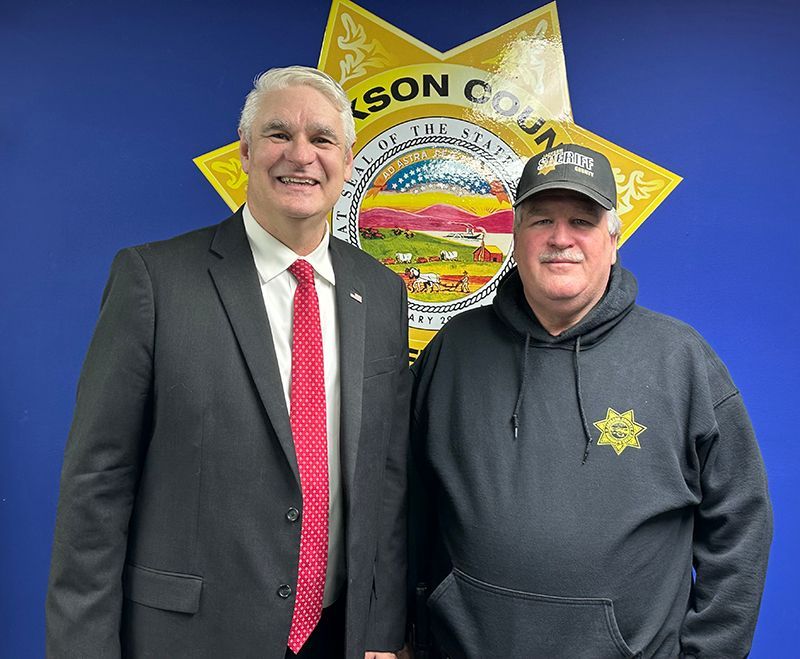
Craig Bowser today earned key endorsements out of Brown and Jackson Counties in his bid for the Kansas Senate. Brown County Sheriff, John Merchant, and Jackson County Sheriff, Tim Morse, endorsed Republican Craig Bowser over the incumbent independent candidate. “Craig Bowser is a strong conservative ready to defend our Constitution and fight for public safety,” said Sheriff Merchant. “I’m proud to endorse Craig for Kansas Senate and I look forward to working with him to keep our citizens safe.” Bowser, a resident of Jackson County, is a retired military officer who worked for a veteran’s advocacy organization in Manhattan before returning to his family farm in Holton. “Craig Bowser is the kind of leader we need in the Kansas Senate. He is a conservative ready to defend our Constitution and fight for public safety,” said Sheriff Morse. “I’m proud to endorse Craig for Kansas Senate and I look forward to working with him.” Bowser is facing a former Republican turned Independent in Dennis Pyle from Brown County. Pyle mounted an independent campaign for governor that delivered the race to Democrat Laura Kelly in 2022. “Coming out of the military where I was responsible for security and policing in hostile environments, I have a profound respect for what our law enforcement officers do every day to keep us safe,” said Bowser. “I appreciate the support of law enforcement officials like Sheriff Merchant in my bid for the Kansas Senate.” Kansas Senate District 1 includes all of Atchison, Doniphan, Brown, Jackson, and Nemaha counties as well as parts of Leavenworth, Jefferson, and Marshall counties.
First Congressional District Vice Chairman, Craig Bowser, is opposing the Kansas Republican Party Rules Committee’s proposal to eliminate key officials from the GOP state executive committee. The proposal would remove Attorney General Kris Kobach and Senator Roger Marshall, as well as representatives of college, minority, and women’s Republican organizations from the leadership of the Republican Party. In a public statement, Bowser said “The Kansas Republican Party is a big tent party, and removing the voices of so many Republican activists and elected Republican officials is damaging to the Republican brand locally, statewide, and nationally. The Republican party is the party of Abraham Lincoln and we’ve always attracted people with our universal messages of faith and freedom. I stand with our state party chairman and the district chairs who have requested that the rules committee rescind its recommendation to change the rules and eliminate this vital representation from the executive committee.” Bowser, a native of Jackson County, is running for the State Senate in District 1.
Craig Bowser of Holton launched his campaign for Senate District One this week. Craig Bowser is a fifth generation Kansan raised on a ranch near Holton. After graduating from Holton High School, Bowser earned a bachelor’s degree from Emporia State University and an MBA from Washburn University in Topeka. “I’m running for the State Senate to return conservative leadership to the first senate district,” said Bowser. “We do not currently have a Republican senator, and the alternative isn’t conservative. I’m the conservative Republican ready to serve.” Bowser appointed Bryan Clark of Atchison as his campaign treasurer. Clark serves as the president of the Kansas State Troopers Association. Bowser previously worked in Manhattan at the Service-member Agriculture Vocation Education (SAVE) Farm. After concluding his work there in 2021, he returned to his farm in Holton and started work at the Kansas Department of Revenue in Topeka. After earning his degrees, Bowser joined the U.S. Army Reserves where he served for 24 years. After completing multiple combat tours in Iraq, Bowser used his G.I. Bill to earn his doctorate in strategic security from Henley Putnam School of Strategic Security. During his time in the military, Bowser served as a civil affairs officer, working with political leaders and citizen groups where he was instrumental in establishing freedom and democracy. Bowser helped to facilitate the first free elections in Iraq in 2005. He was awarded the prestigious Meritorious Honor Award from the U.S. Department of State during one of his combat tours. In 2018, Kansas Governor Jeff Colyer appointed Bowser to the statewide Commission on Emergency Planning and Response. In 2019 he completed the Kansas Republican Leadership Series. Bowser is currently the vice chairman of the Kansas First Congressional District Republican Party. Craig Bowser has not only served as a leader in the Army but has also held leadership positions in a variety of companies and industries such as transportation, utilities, nuclear, government, and agriculture. Today, Bowser works for the State of Kansas as an information security officer in Topeka. Craig and his wife Erin live on their farm near Holton.